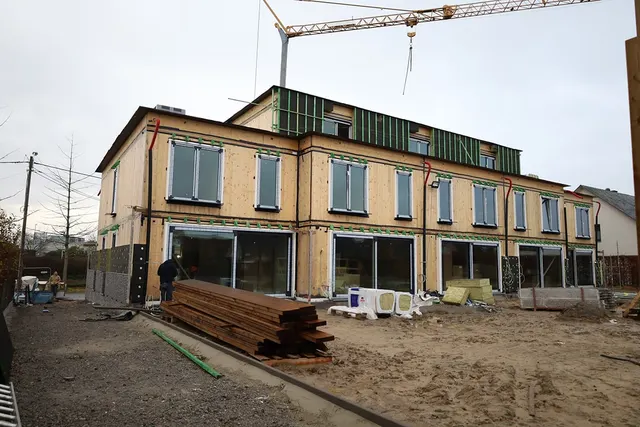
The benefits of pit thermal energy storage and individual heat pumps brought together in a single project
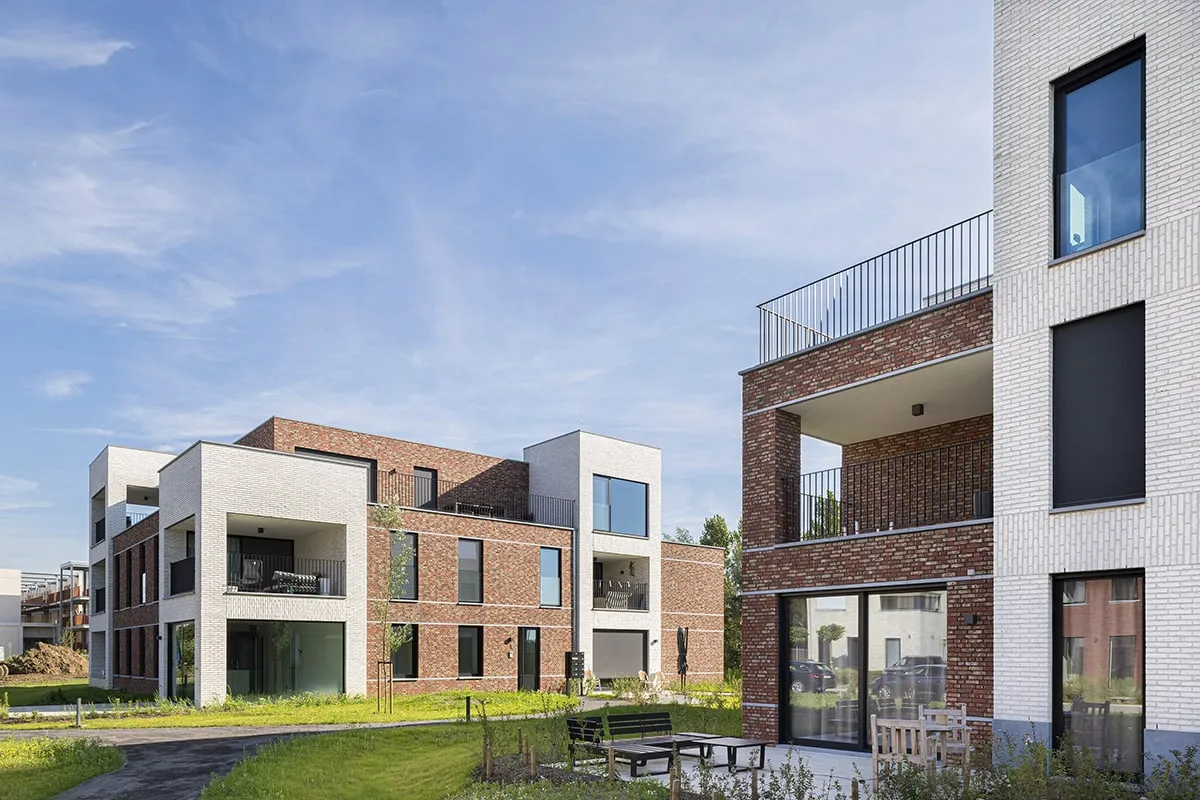
The new Schoem residential development in Hoevenen (Stabroek) is set amid the polders that define the region. With this green setting in mind, architecture practice LV-architecten and developers Reno-Art and Van Wellen Group have ensured that the energy performance of the four residential blocks is as green as possible, including by fitting each of the 46 apartments with an Itho Daalderop WPU 5G heat pump. “Choosing an individual system for each dwelling, while connecting it to a shared BTES field, means residents do not have to pay communal charges and can choose to heat or cool their apartment individually at any time,” explains Tom De Boeck of Reno-Art.
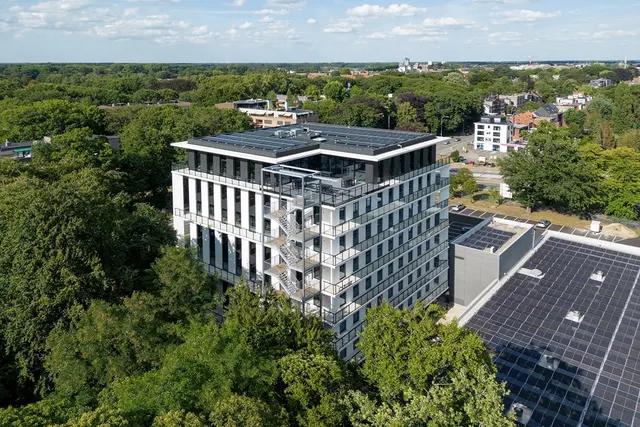
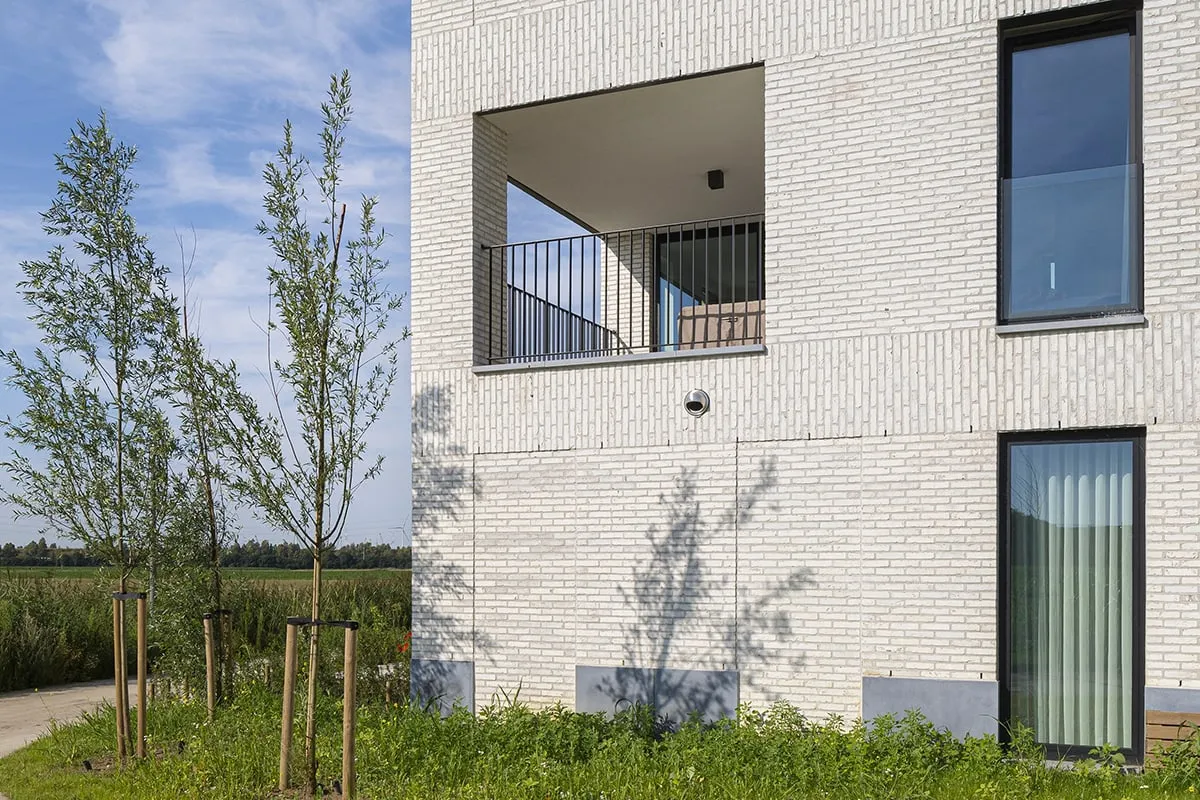
Schoem, which was completed at the end of 2023, consists of four three-storey residential blocks above a shared underground car park, providing 46 apartments of various sizes. The stepped façade lines prevent the buildings from looking monolithic, while the different volumes have been positioned to give passers-by views of the fields beyond. Schoem is set amid a green oasis formed by the neighbouring park and the project’s landscaped outdoor spaces, as well as the adjacent fields. Swales create slopes and paths connecting the four volumes.
Green technologies
Schoem’s green credentials extend beyond the project site. Submitted successfully by LV-architecten, Reno-Art and Van Wellen Group to the municipality of Stabroek, the project also stands out for its green technologies. In 2019, with support from IGEAN, the municipality began looking for one or more developers willing to buy the site and submit a project for it straight away. The Itho Daalderop WPU 5G heat pumps installed in all 46 apartments are a good example of the project’s sustainable approach.
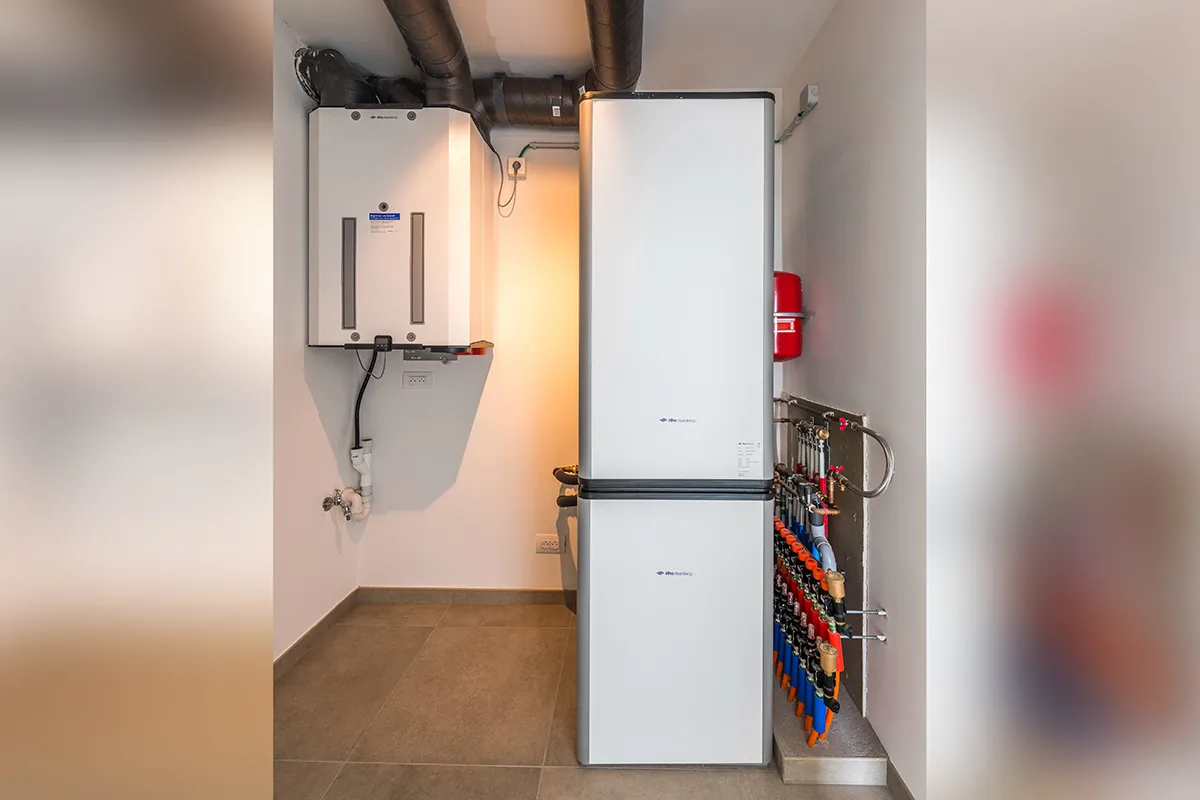
“Initially, we wanted to install a shared heating and cooling system, with several communal geothermal heat pumps, buffer tanks in the basement and supplementary units in the apartments for domestic hot water,” explains Tom De Boeck, project manager for Reno-Art. “It soon became clear that this solution had several drawbacks. For example, it would require a large plant room in the underground car park, meaning one fewer parking space that we could sell as a developer, and residents would face confusing bills because they would be supplied by a shared system. Passive heating and cooling would also only be possible per residential block. So we decided to combine the benefits of pit thermal energy storage with an individual heat pump in each apartment. This would enable residents to save on communal energy costs and choose passive heating or cooling individually at any time. We chose Itho Daalderop’s WPU 5G heat pump. The manufacturer’s strong reputation in the Netherlands, where it is well known, a visit to its showroom and a coastal project using the heat pump in question convinced us. The WPU 5G is available in capacities of 1.8 kW, 2.5 kW, 3.5 kW, 4.5 kW, 5.5 kW, 6.5 kW and 7.5 kW, and can be combined with buffer tanks of 150, 200, 240 and 270 litres. The heat pumps installed at Schoem range in capacity from 2.5 kW to 6.5 kW, depending on the size of the apartment. The corresponding buffer tank for domestic hot water also varies according to the size of the dwelling.”
Easy installation
Itho Daalderop’s support before and during the project gave LV-architecten, Reno-Art and Van Wellen Group confidence in their choice. “In fact, though, the installer Theo Boons and the main contractor Vermeiren did not need much support,” says Tom De Boeck. “The system is fairly straightforward to install. The flow and return pipes running from the BTES field, which we deliberately always install beside the building rather than underneath it so that repairs remain possible if ever needed, to each apartment can be compared to a water pipe. The water circulating in the system does not contain glycol, which rules out dangerous situations in the event of a leak during installation, is more environmentally friendly and ensures very high efficiency. The heat pumps themselves are also very easy to install thanks to their compact design.”
Geothermal heat pumps are not the cheapest heating and cooling solution on the market, given the high capital cost of installing a BTES field, but Tom De Boeck offers a more nuanced view. “In a project of this scale, residents naturally benefit from economies of scale. What is more, a geothermal heat pump can also provide passive cooling in summer, often making investment in an air-conditioning system unnecessary. Another benefit of this dual operation is a better EPC rating, to which the use of ground heat also contributes. Finally, geothermal heat pumps have no outdoor unit, which benefits Schoem’s architectural value and has freed up space on the roof for solar panels.”
Question about this story? Ask your question
In this story
- Project:Schoem
- Location:Hoevenen (Stabroek)
- Architect:LV-architecten
Keep following this
Get an email when a new story is published. No account needed.
- SubjectSustainable construction