Historic character, contemporary performance
Texte Kris Vandekerckhove | Photos Frager
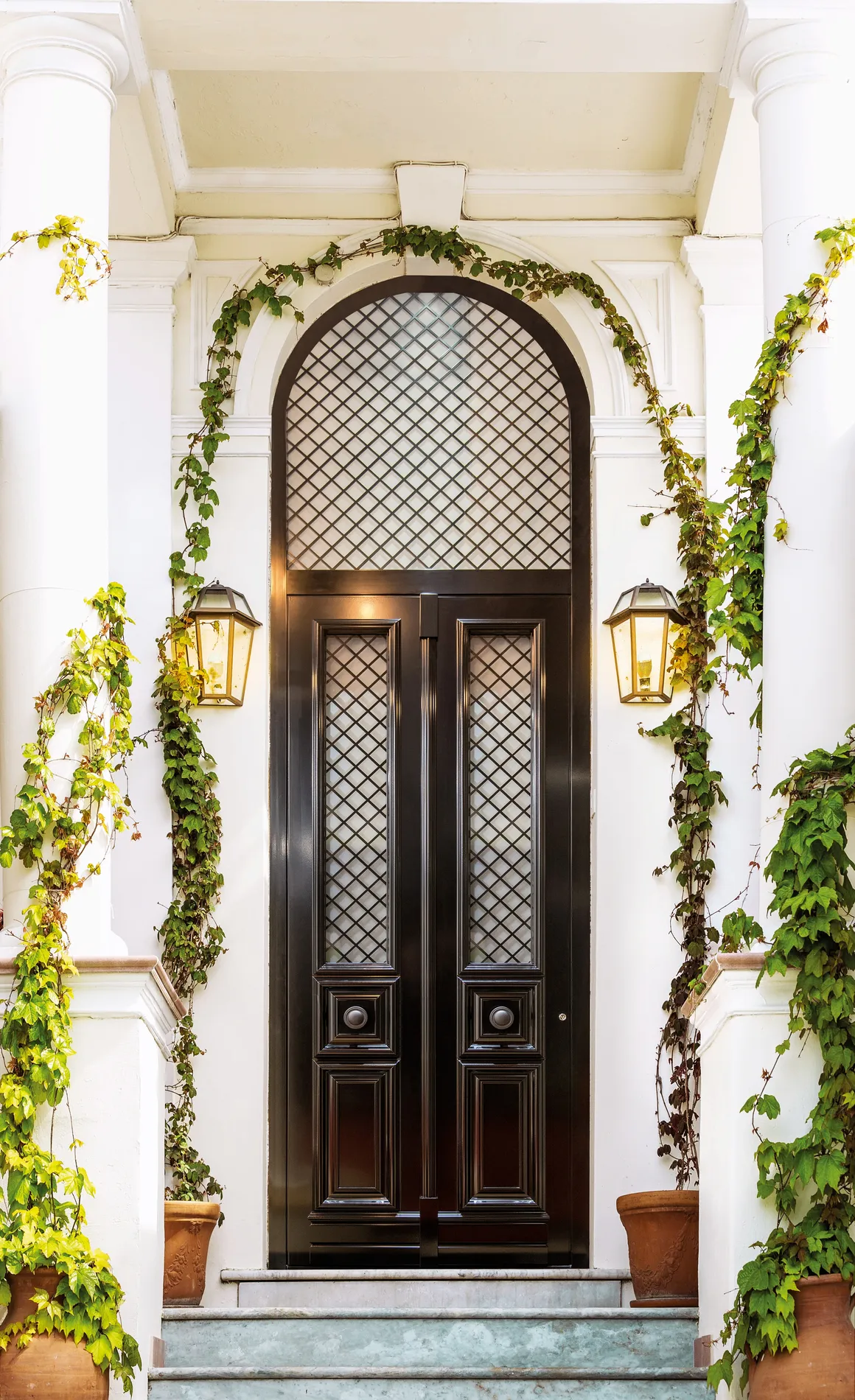
Bespoke doors for characterful townhouses, with modern performance
Walking through our Belgian cities with their medieval past, Bruges, Ghent, Antwerp, Namur, Liège, Mons and/or Tournai, we still come across countless imposing homes with richly moulded front doors, decorative mouldings, decorative strips and wrought-iron grilles. These doors set the rhythm along the street and define the identity of the buildings. Yet behind this charming picture often lies a less romantic reality: worn timber, poor insulation and limited protection against break-ins.
With Frager Tradition, Frager, a supplier of bespoke PVC and aluminium joinery, has developed a solution that combines respect for heritage with contemporary technology. The concept is simple, the execution refined: old timber doors are replaced with almost identical aluminium or PVC models. Visually, they remain true to the original, while technically they are thoroughly modern.
“We receive photos almost every day of homes whose front door largely defines their style,” explains Franck De Munster, General Manager of Frager and a trained architect. “The owners are determined to preserve that identity. The problem is that, technically, these doors belong to another era.”
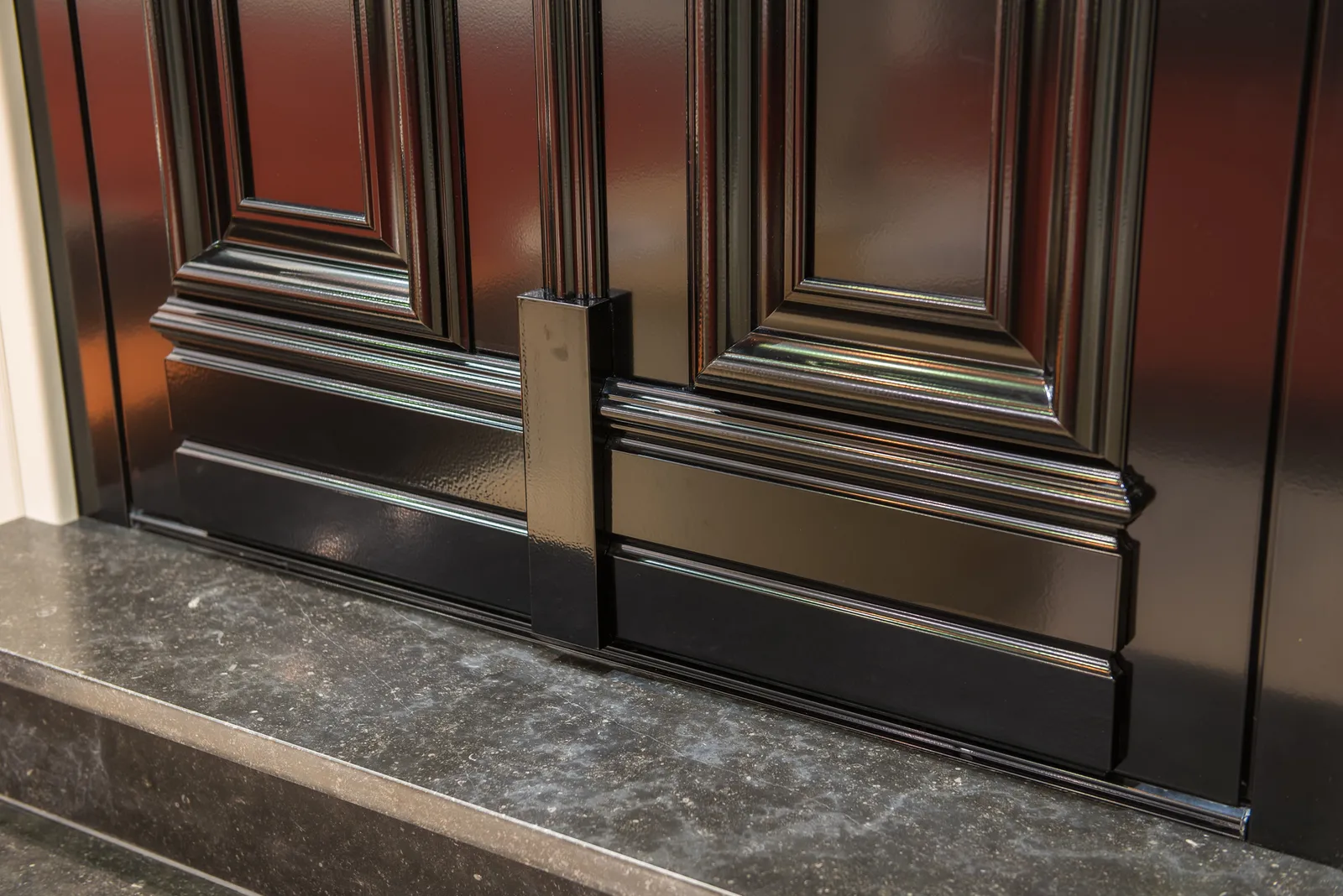
Bespoke design based on photographs in context
Frager works exclusively on a B2B basis, supplying door panels to door and window manufacturers. All design work is carried out in-house. A detailed drawing is prepared from the photos and measurements provided. If required, this can be followed by a 3D visualisation showing the new door in its façade setting.
“We have an extensive library of profiles, mouldings, plinths and grilles,” says Kris Vandercruyssen, Sales & Marketing Manager at Frager. “This allows us to put together a door that closely reproduces the proportions and details of the original.”
No two historic doors are quite alike. Yet, through extensive customisation, Frager manages to design a solution that fully matches the original design. The team has even gone out into the field to photograph hundreds of historic doors and analyse their distinctive features.
“This fieldwork brings home just how much buildings that look similar at first glance can differ,” continues Franck De Munster. “We have immense respect for the craftsmanship of the past. We make sure that this is reflected in our work today. But it is not just about nostalgia. We want to offer charming front doors that preserve the character of the past while also incorporating the technical advances of our time.”
Authentic appearance, modern performance
The main difference lies beneath the surface. Whereas old timber doors often provide poor thermal and acoustic performance, new aluminium or PVC doors meet current energy performance requirements. In addition, three-point locks and modern security hardware can be seamlessly incorporated into projects. “With a timber door, it is difficult to achieve the same security standards,” comments Kris Vandercruyssen. “Here, we combine a traditional appearance with modern protection against break-ins, improved airtightness and significantly better thermal performance.”
Typical historic features are cleverly reimagined. Traditional wrought-iron grilles give way to powder-coated aluminium versions that attach magnetically. These grilles retain their familiar appearance, but can now be removed easily for maintenance. All without a thermal bridge. The result? A door with the character of the past and performance fit for the future.
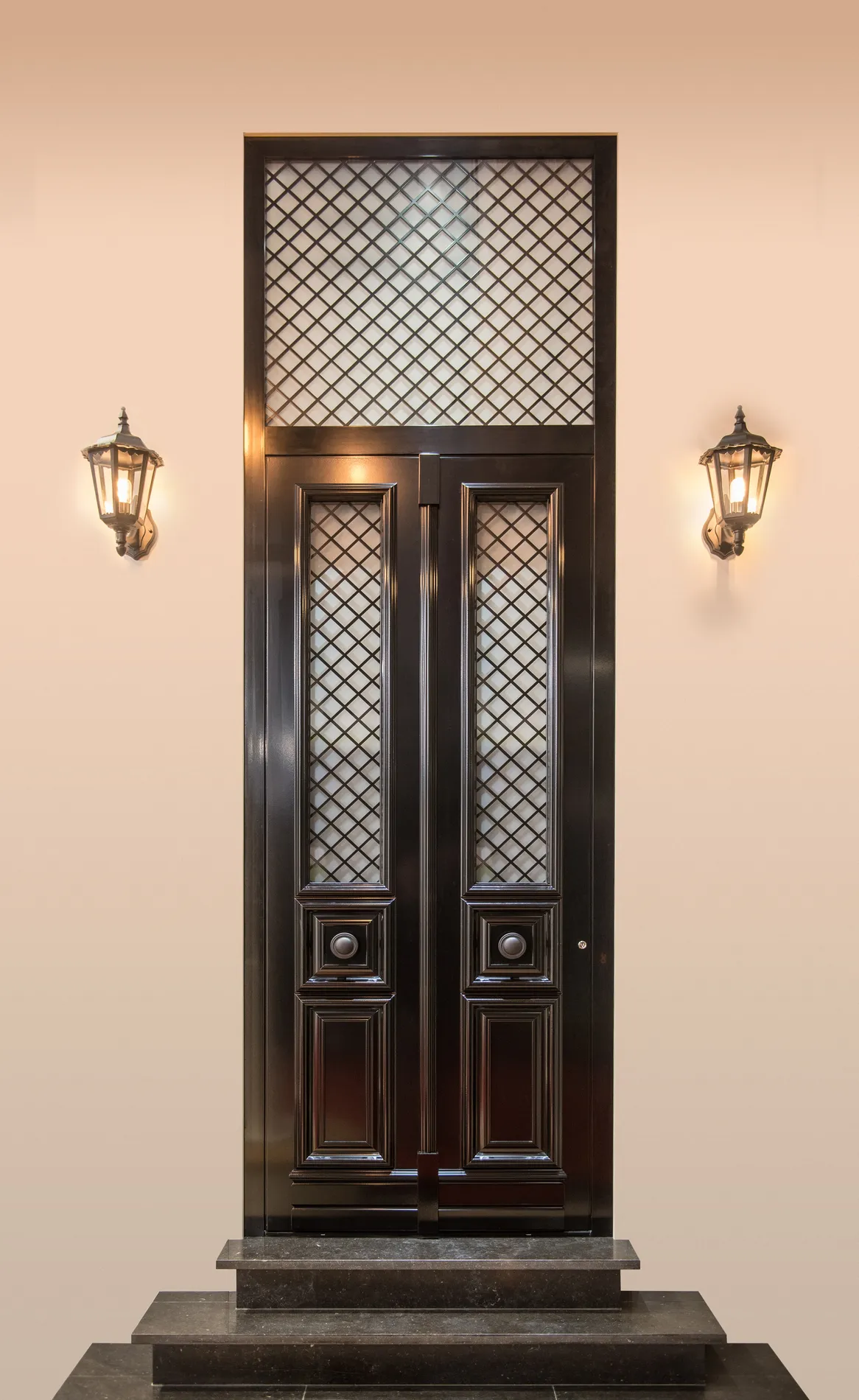
Heritage and regulations
In conservation areas (protected urban heritage), replacing timber joinery is a sensitive issue. The material used is often the main concern. However, Frager has found that discussions tend to become more straightforward when a project remains visually faithful to the original.
“If you present the project properly, with a clear visualisation of the result, you will find that local authorities are immediately more pragmatic,” says Franck De Munster. “Ultimately, it all comes down to preserving the aesthetic value of the heritage. As long as this is respected, there are often more possibilities than you might think.”
Sustainability as a matter of course
Alongside aesthetics and performance, sustainability also plays an important role. Frager’s systems can be completely dismantled. “When a door reaches the end of its life, the aluminium, glass and insulation can be easily separated,” says Franck De Munster. “This means the door can be fully recycled.”
Individual components can also be replaced if damaged or vandalised, without having to replace the entire door. “This option significantly extends the product’s service life,” adds Kris Vandercruyssen. “Instead of replacing everything, you replace only the part concerned.” This combination of dismantlability, recyclability and repairability is an ideal response to the growing demand for circular, adaptable solutions in renovation projects.
With Frager Tradition, the Wielsbeke-based company shows that heritage and innovation need not be at odds and can, on the contrary, reinforce one another. This is a particularly relevant response as renovations become more widespread in our historic city centres.
Question about this story? Ask your question
Companies in this story
Keep following this
Get an email when a new story is published. No account needed.
- ThemeRenovating without erasing heritage
- SubjectNews
- CompanyFrager