Why lighting design is increasingly focused on performance, control and quality of use
Texte Christobal van Leeuwen | Photos Unsplash / iStock
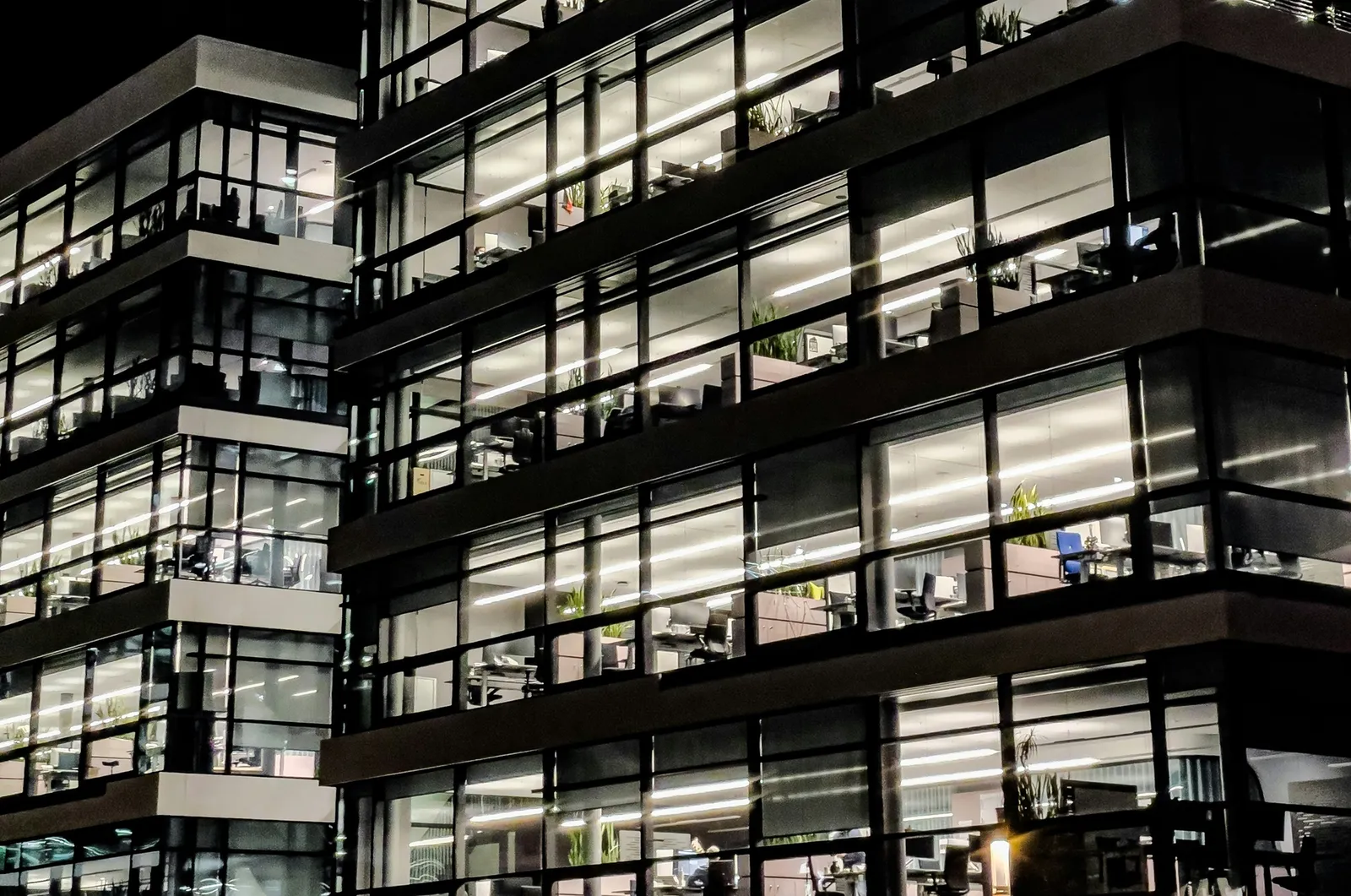
Today, it is difficult to envisage an architectural project that does not integrate lighting from the outset. And not just for aesthetic reasons: light is now an integral part of how a building functions. Lighting is evolving from a visible object into a high-performing infrastructure: a system that shapes how spaces are perceived, how flexibly they can be used and how comfortable they remain over the long term.
This shift has direct consequences for design practice. The traditional focus on luminaires and ambience is giving way to a holistic approach that brings together light quality, energy performance, control, maintenance and adaptability. Lighting is therefore becoming less of a finishing choice and more of a structural component of the project, on a par with HVAC systems or acoustics.
From new-build thinking to retrofit practice
One of the most visible developments is the shift towards retrofit. In offices, healthcare environments, hotels and public buildings, demand today is less about selecting a new system and more about strategically upgrading existing installations. This reflects the reality of a sector dominated by renovation and reuse.
In this context, retrofit is no longer limited to simply replacing a light source. It involves compatibility with existing infrastructure, upgrading drivers, improving optical performance and integrating control systems, often without work to ceilings or finishes. Visual impact also matters: fewer luminaires, less visual clutter, greater control.
Well-executed retrofit projects therefore deliver far more than energy savings. They also improve glare control, spatial legibility and the overall quality of use, without disrupting building operations.
Regulation as a driver of quality
In recent years, European regulation has significantly raised the bar for lighting.
The Ecodesign Regulation (EU) 2019/2020 introduced stricter requirements for the energy performance and quality of lighting products and their control gear. At the same time, energy labelling was redefined under Regulation (EU) 2017/1369, making products easier to compare.
For specifiers, this means performance depends less on manufacturers’ claims. Through EPREL, the European Product Registry for Energy Labelling, technical data is publicly available and verifiable. This makes the specification phase more objective and supports better-informed material choices. Standardisation also remains crucial. NBN EN 12464-1:2021 not only sets illuminance levels for indoor workplaces, but also specifies requirements for glare (UGR), luminance ratios and visual comfort. Lighting is therefore no longer assessed solely in lux, but in terms of how the space is actually perceived. For emergency lighting, NBN EN 1838:2024 confirms the same trend: light is not merely an aesthetic or functional element, but also a vital factor in safety and continuity.
Lighting control as the new standard
Where lighting was once designed statically, control is now standard practice. Systems based on DALI-2, KNX or wireless protocols allow lighting to be managed by zone according to daylight levels, occupancy and usage scenarios.
This has a direct impact on how spaces are used. Lighting is no longer fixed in a single plan, but tailored to a range of situations: working, meeting, moving through a space and evening use. During the day, artificial lighting in an area is automatically dimmed when daylight is available, while different scenes take over in the evening.
This flexibility makes it possible to adapt lighting to use without physical intervention. For architects, this means moving from a focus on placing objects to thinking in terms of scenarios. Lighting supports programmatic flexibility and makes buildings more resilient in use.
From lux to experience
The definition of “good lighting” has broadened considerably in recent years. Whereas the focus was once on horizontal illuminance, factors such as glare, contrast, light distribution and material reflectance now play a central role.
UGR values, luminance ratios and vertical illuminance levels have a major influence on perceived comfort, particularly in screen-based work environments. The relationship between daylight and artificial lighting is also becoming essential, both for visual comfort and energy performance.
This is why lighting can no longer be treated as a final-stage consideration. Choices about ceilings, materials and openings have a direct impact on light quality. Addressing these interactions too late often leads to constraints that luminaires alone cannot resolve.
Human-centric lighting, without oversimplification
The discourse around human-centric lighting has also become more nuanced. Initially presented as a universal solution, it is now recognised as highly context-dependent. It is not a product feature, but a design approach.
It requires a good fit between the user, the activity and the time of day: who uses the space, for how long, and with what visual and biological needs? In healthcare, education and work environments, this approach is relevant, provided it is applied specifically and thoughtfully. The question is therefore not whether dynamic colour temperature is available, but whether light can genuinely contribute to orientation, comfort and circadian rhythm.
Aesthetics: less expression, more precision
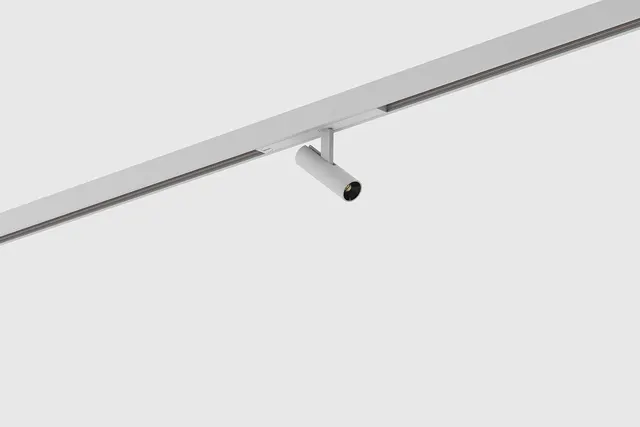
Aesthetically, the focus is shifting from expression to control. Luminaires are becoming more compact, more discreetly integrated and less visually dominant. Small apertures, trimless recessed fittings and refined low-glare optics are gaining ground.
This shift is part of a wider architectural trend towards restraint, reduction and materiality. Lighting does not necessarily need to have less impact, but it should be less prominent as an object. Quality lies in the light itself, not in the luminaire.
Circularity and lifecycle thinking
Beyond energy efficiency, circularity is becoming a major concern. European regulation and greater transparency around product data show that lighting is increasingly assessed in terms of its lifespan, repairability and the replaceability of its components. For designers and specifiers, a luminaire is no longer a sealed product, but an assembly of components: light source, driver, optics and housing. Choices around replaceability, compatibility and maintenance are becoming as important as light quality.
This shift makes lighting a long-term decision, integrated into building operations.
Question about this story? Ask your question
Keep following this
Get an email when a new story is published. No account needed.
- ThemeLight and occupant comfort
- SubjectLighting