Projects for tomorrow

Over the past five years in Flanders, numerous experiments have been carried out and knowledge shared on circular construction. This provided an opportunity to see many enthusiastic and committed professionals in action during the Green Deal Circulair Bouwen action days and through countless Vlaanderen Circulair projects. Buildwise has also enabled me to support and guide many of the sector’s pioneers in putting circular principles into practice.
It is therefore worth asking how we can take things to the next level. How can we bring everyone on board with circularity? I also wonder whether the EU taxonomy will provide the expected (and necessary) impetus in 2024. Large companies, such as major property developers, manufacturers, banks and insurance companies, will be required to report on their sustainable activities, and will then impose these requirements on businesses in their value chains. The vast majority of construction and installation companies and architectural practices are therefore not directly affected by the taxonomy, but it may still have an indirect impact on them. How far will the taxonomy’s ‘circularity criteria’ reach? Will they find their way onto the design table and into specifications? And if they do, will architects be ready to respond?
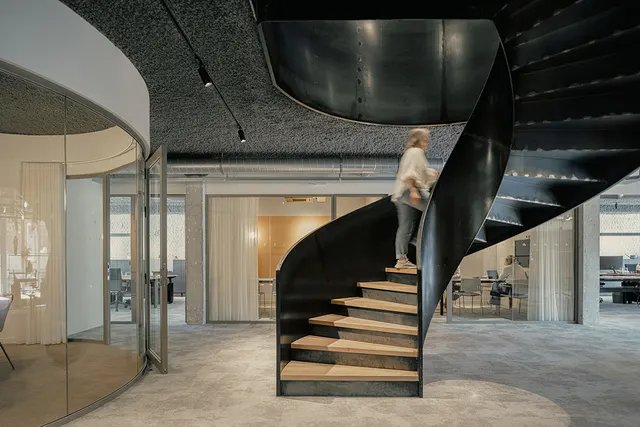
Every architect will therefore need to learn to design projects for tomorrow, based on possible scenarios, rather than for today’s specific needs. In other words, architects will need to put less of their personal stamp on a project and leave future owners or users more freedom to make adaptations. Of course, it is impossible to anticipate every possible future change, but a number of smart design choices can extend a building’s lifespan. The choice between demolition, renovation or repurposing is often linked to ceiling heights, the structural concept, space for building services, the potential to alter layouts, and so on. In my view, architects need to be more aware of this responsibility.
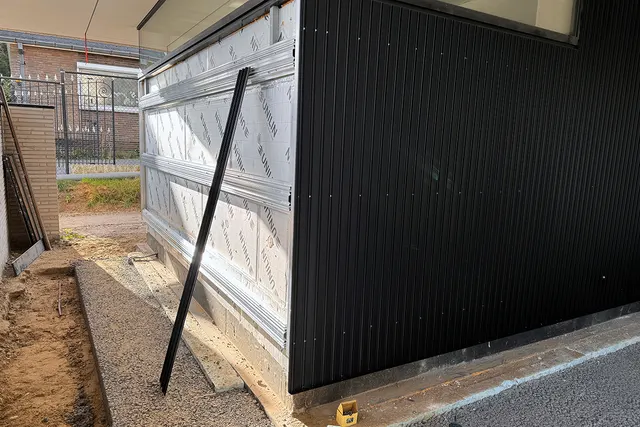
We will also need to pay more attention to standardisation. This helps ensure that building components have greater potential for reuse in the future. Moreover, as manufacturers take on increasing responsibility for the second life of their products, through reuse or recycling, they will draw up standards for the use of their materials. Technical building solutions will increasingly be offered by the market as ‘complete solutions’, with standard dimensions or specific connection methods, rather than being devised at the design table.
Finally, architects play a key role in using reusable materials in projects. Such materials may have imperfections, colour variations or, at times, uncertain technical performance. By combining smart, creative design with experience in collaboration and coordination, architects can make a difference and are well placed to increase the chances of success for reusable materials.
I look forward to seeing what 2024 has in store for us, and how the construction sector will turn the transition to a circular economy into reality.
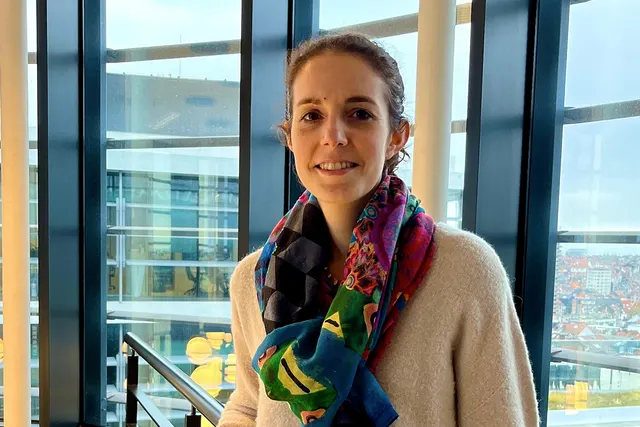
Aline Vergauwen,
Dr. Ir. Arch. Project Manager at Buildwise
Question about this story? Ask your question
Keep following this
Get an email when a new story is published. No account needed.
- ThemeBuilding with fewer resources
- SubjectCarte blanche