Play your part!
Texte : Eva Goossens
Innovations for greater sustainability
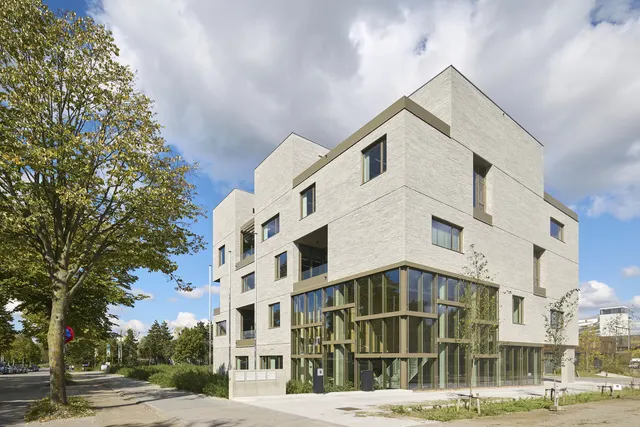
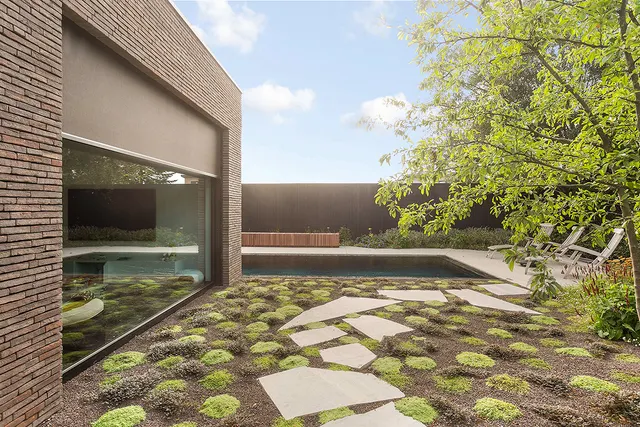
Brick is inseparable from Belgian building culture. Tradition comes first! But that does not mean the sector is stuck in the past. Quite the opposite. The sector is working to make its products more sustainable, both in brickworks and among producers of other types of facing stone, all joining the wider drive towards more environmentally friendly solutions. A story of efficiency, dematerialisation and circularity.
Construction can be more sustainable, and it must become so. The brick sector has an important contribution to make in this regard. Brick stands for tradition. It is a cultural icon and a symbol of craftsmanship, but it is also associated with innovation, often in the service of sustainability.
Eco-formats
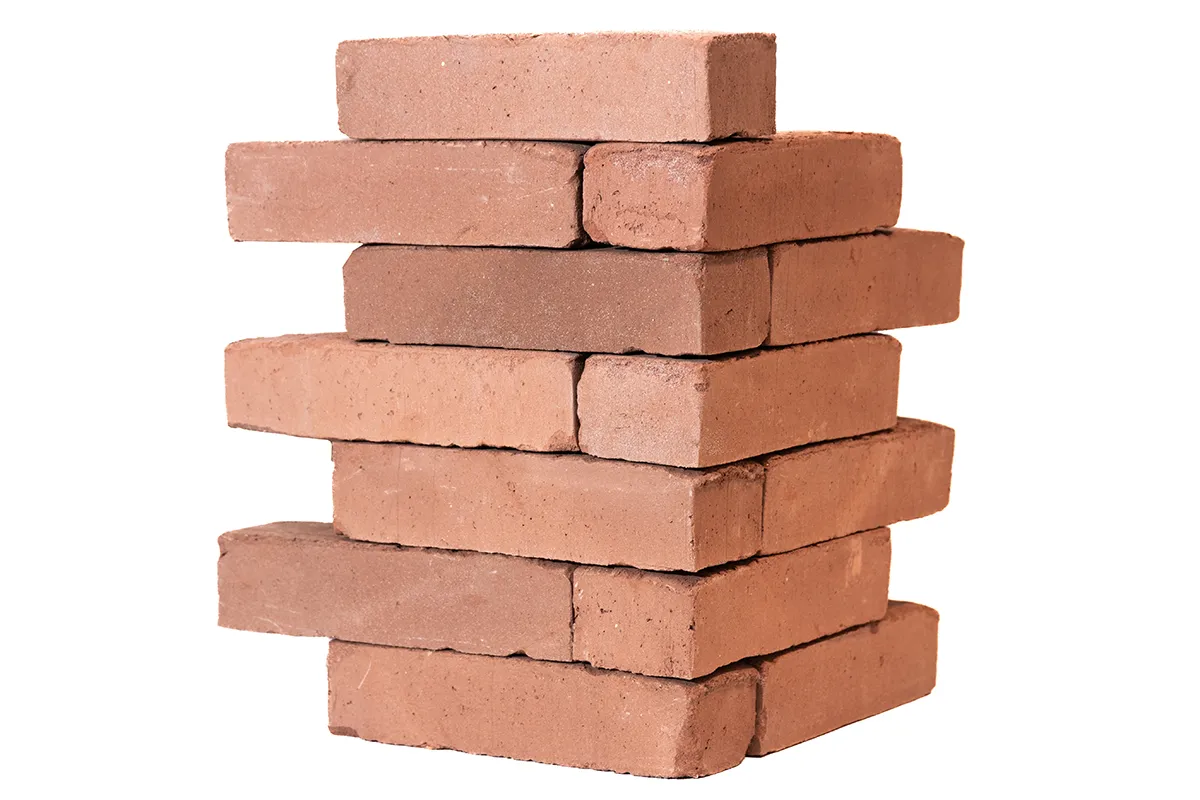
In 2023, the Belgian Brick Federation drew up a sector charter, signed by eleven companies. Its aim was to confirm the sector’s commitment to the transition to a low-carbon society by 2050. The signatory companies undertake to consider individually how they can reduce their energy and raw material consumption. The focus is on eco-formats, which are being adopted more and more widely. The figures show that slimmer facing bricks already accounted for 1 293 183 m² in 2023, an increase of more than 37% compared with 2022. And this growth is expected to continue. Confidence in these formats is growing steadily, as is the range on offer, with several suppliers making them the standard. This is the case at wienerberger, for example, whose new Fjord collection of facing bricks, inspired by the raw beauty of nature, is available in the Eco-brick WF format. During production, natural pigments are applied digitally and then fired into the brick. This is truly a meeting of tradition and technology.
Greater circularity
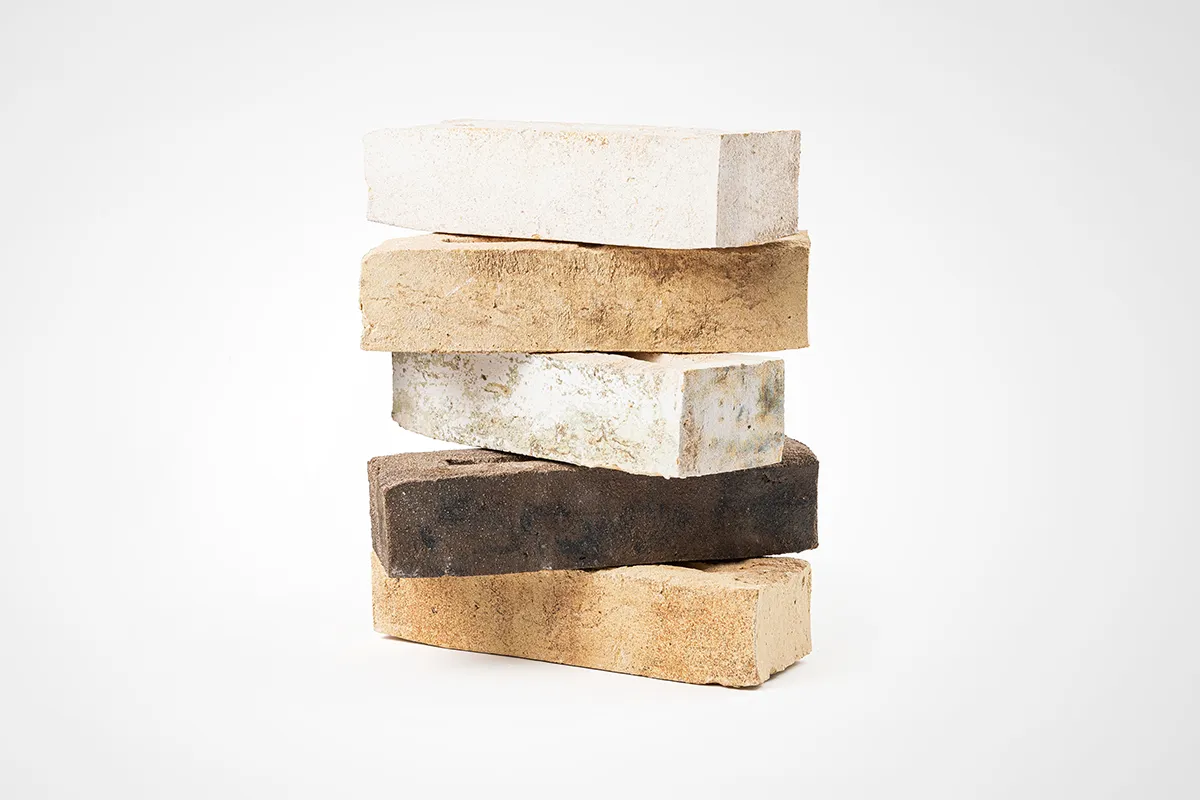
Vande Moortel brickworks is also firmly committed to the ECO-7-size eco-format, with some of the brand’s new bricks now available exclusively in this 7 cm-thick format. These include Circular Brick, developed jointly by BrickZ and Vande Moortel. A specific batch of this facing brick is made entirely from available secondary raw materials, determining the colour and composition of the bricks, as well as the quantity produced.
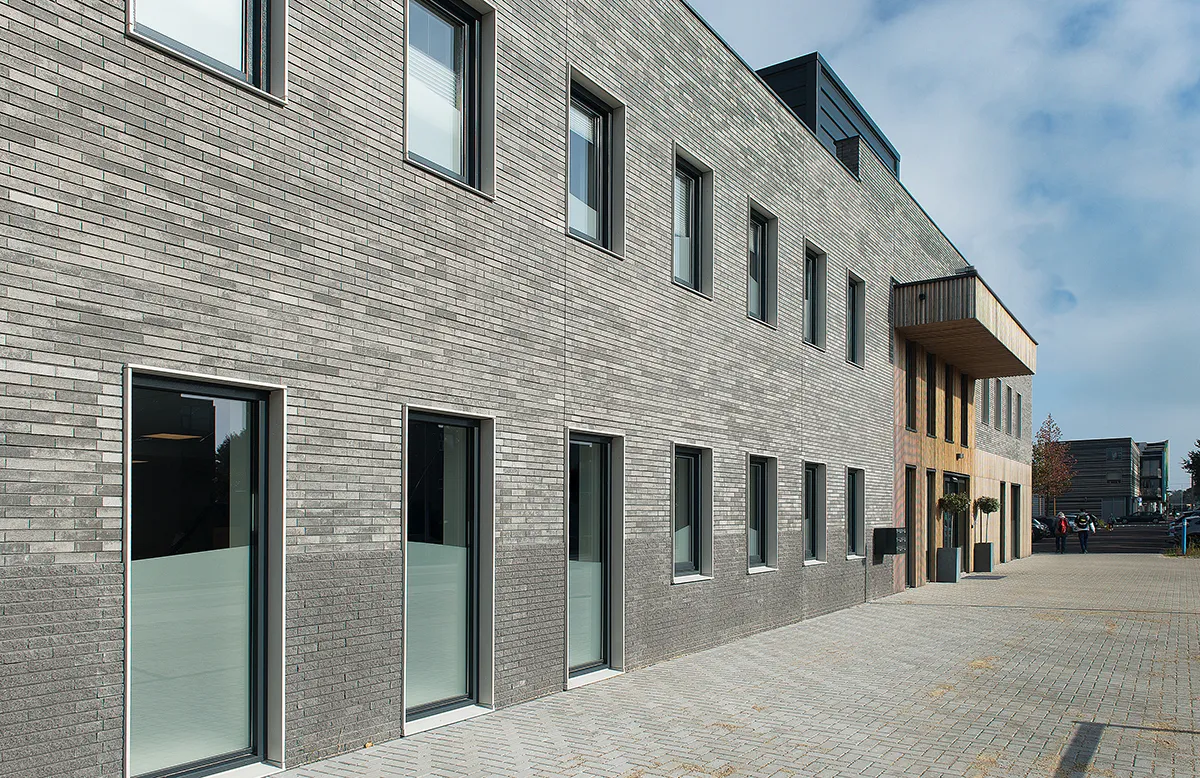
In a completely different category are GeoStylistix facing bricks from Dutch company MBI. These slim, extra-long concrete bricks are now also available in an eco-format and in a new ReUsed version. In the latter, at least 65% of the conventional raw materials in the concrete core of the brick are replaced with granules recovered from residual streams. The 10 mm-thick top layer contains minerals with colourfast properties and offers the highly sought-after appearance of natural stone.
Reuse
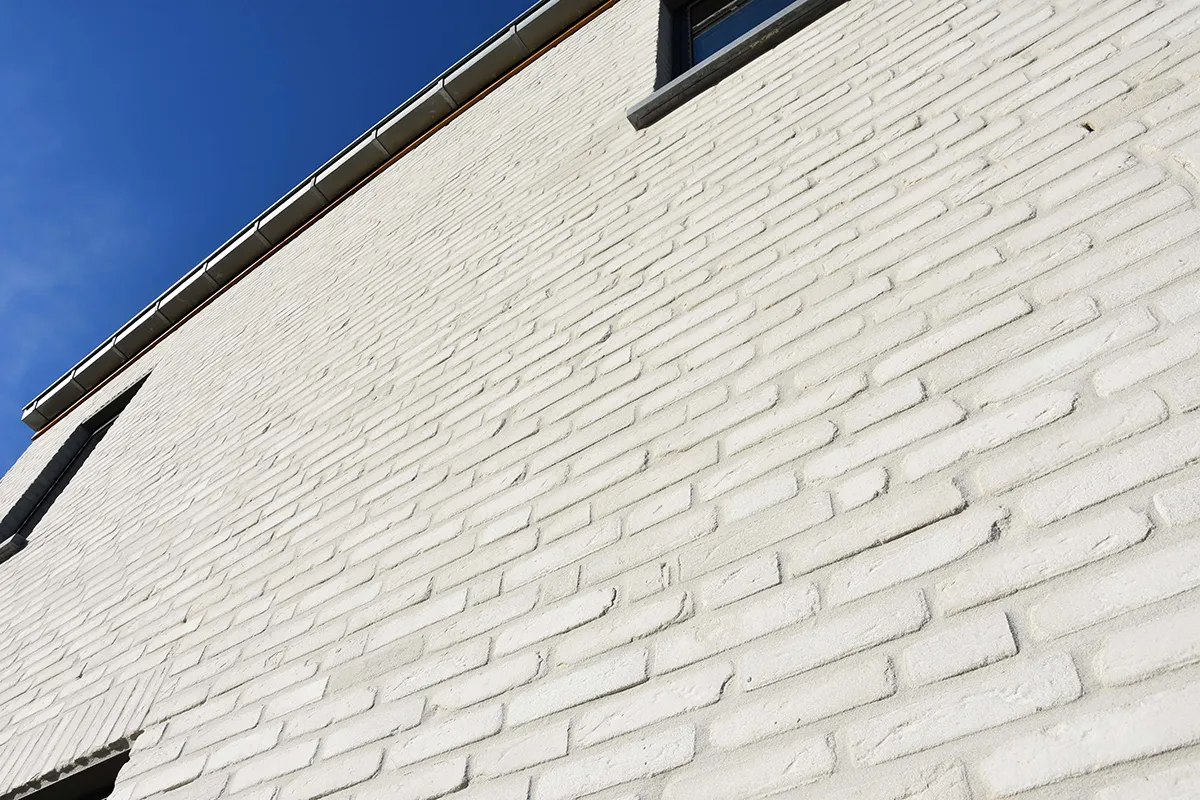
Of course, circularity is not limited to secondary raw materials. What about reusing whole bricks? Research conducted in 2023 as part of Anke Frulleux and Esther Vandenbulcke’s thesis at Ghent University shows that reusing ceramic facing bricks saves an average of 85% of the environmental impact. Using brick slips can make this reuse easier. Dry-stacked systems are clearly the best option for circularity. They avoid the need for mortar and adhesives, making it possible simply to dismantle the structure and reuse the bricks.
Cutting CO2 emissions further
Companies are therefore fully embracing dematerialisation, recovery and the reduction of CO2 emissions. Vandersanden launched the first carbonated facing brick, a CO2-negative brick. Finally, Lowie bricks, produced by a sister company of Olivier Bricks, are hybrid bricks that lie at the intersection of ceramics and concrete. Unlike ceramic facing bricks, Lowie Hybrid Bricks are not fired. Their specific production process cuts CO2 emissions by 80% compared with ceramic facing bricks. Of course, for ecological progress to inspire the enthusiasm it deserves, it must remain affordable, and that is clearly the case here. The transition is evidently under way. The rest is up to us.
Question about this story? Ask your question
Keep following this
Get an email when a new story is published. No account needed.
- SubjectExterior