More than just greenery overhead
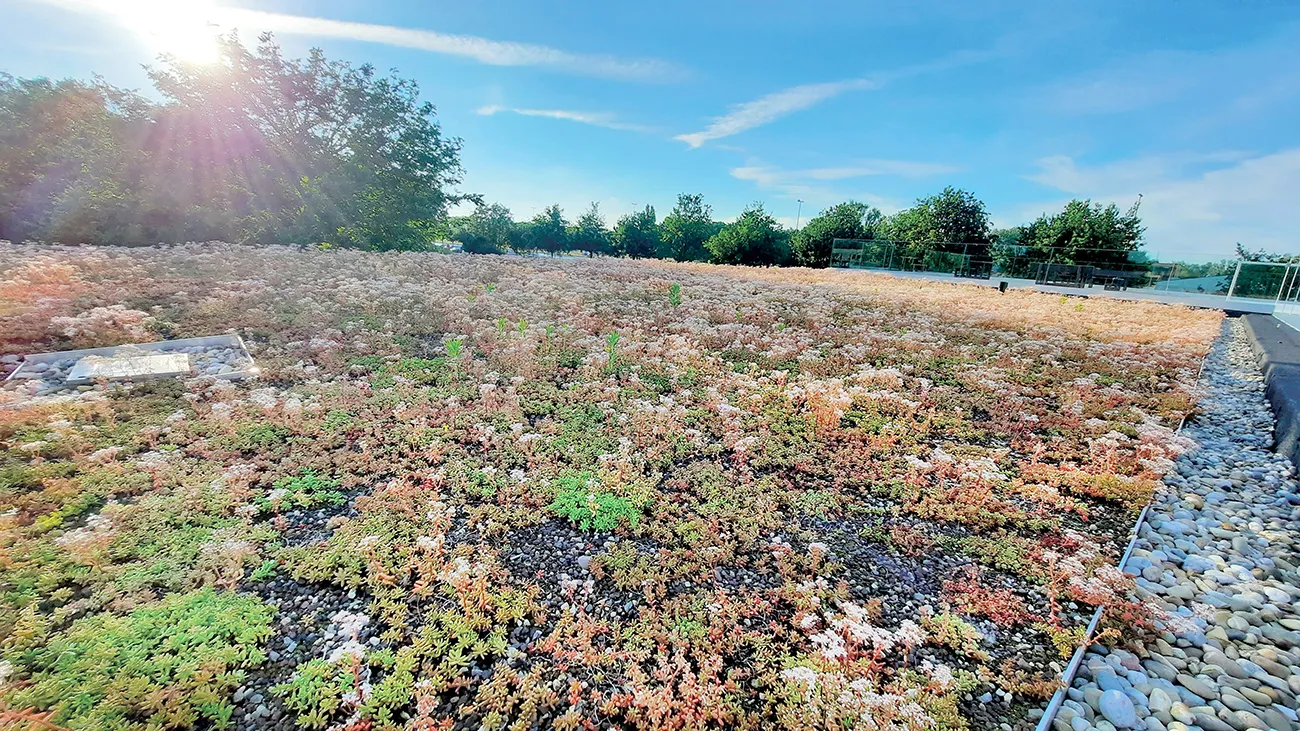
Every additional square metre of green space benefits nature, the climate and quality of life in general. That is why businesses, private individuals and local authorities alike have increasingly invested in green roofs and roof gardens in recent years. In principle, anything is possible today, from a simple sedum roof to a fully fledged rooftop park with trees, paths and water features. However, designing, installing and maintaining green roofs cannot be compared with the equivalent work in a conventional garden. Here are some key considerations.
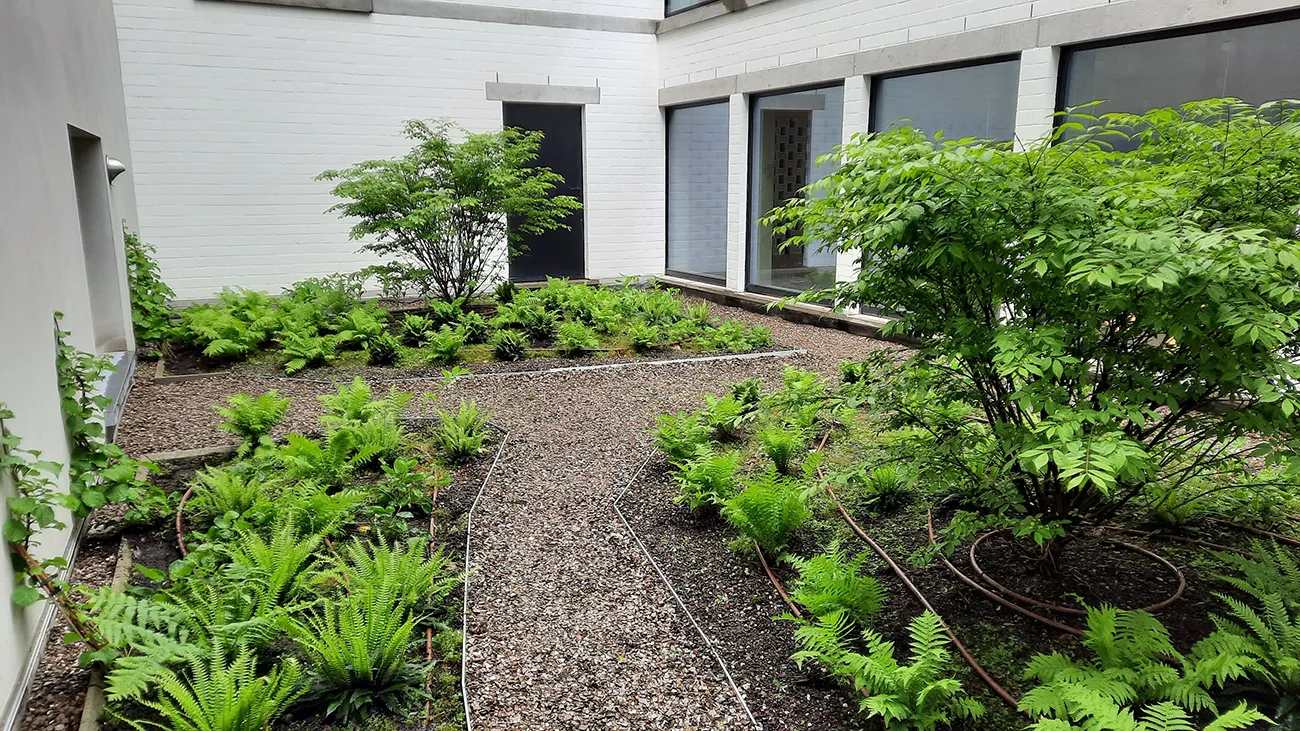
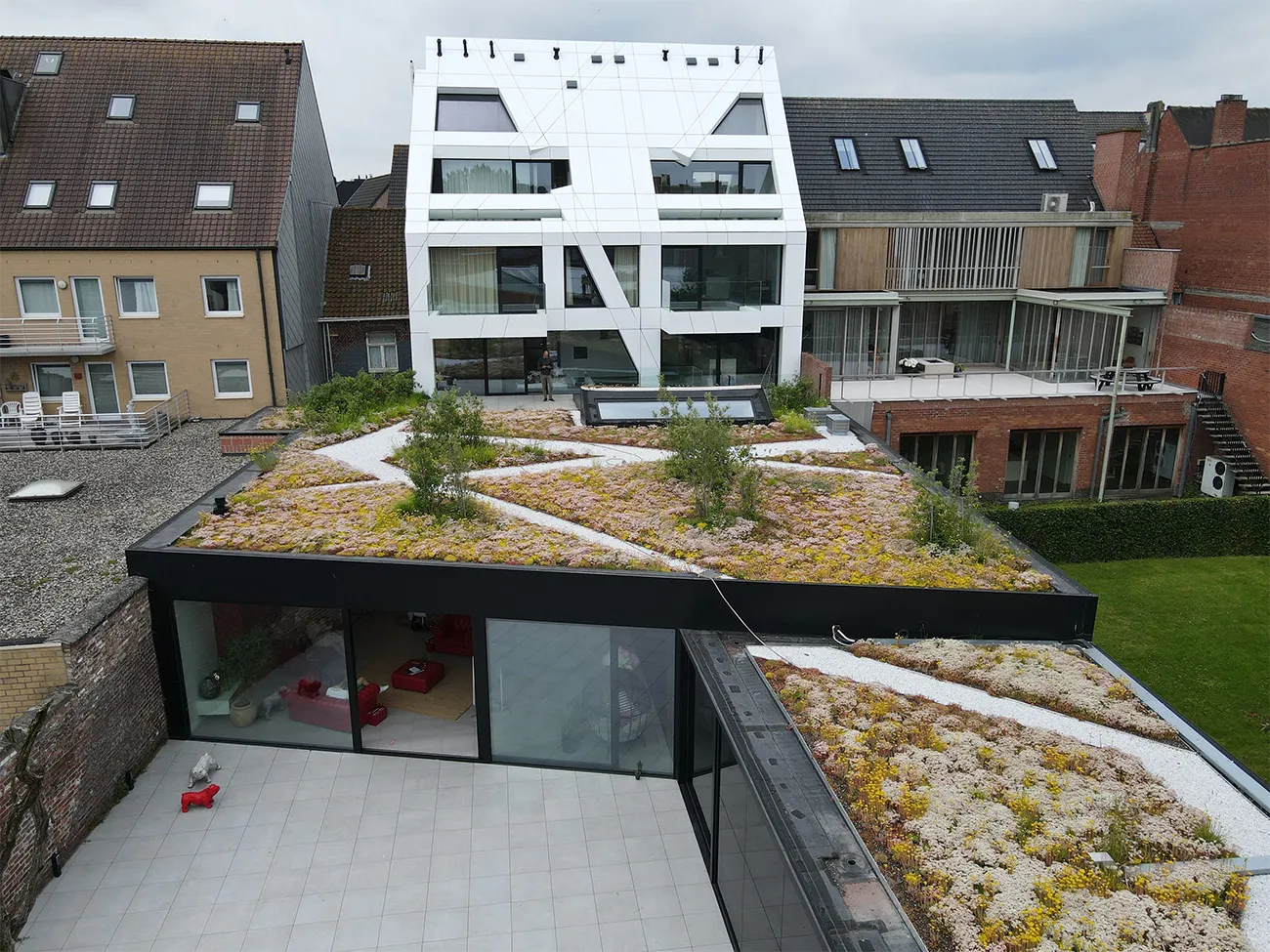
There are several types of green roof. The best-known distinction is between intensive and extensive green roofs. Extensive roofs, with plants that need no maintenance, were popular with private individuals for many years. But since the arrival of prestigious projects featuring intensive green roofs, more and more people are now opting for what is known as a roof garden. These roof gardens offer a much wider choice of planting, including shrubs and multi-stemmed trees, and it is even possible to create terraces, paths and other classic garden features on these green roofs.
Numerous benefits
Whatever its type, every green roof offers a number of specific benefits. First and foremost, it has a positive impact on biodiversity. Additional green spaces create new opportunities for flora and fauna, and even the simplest extensive green roof will attract bees and butterflies with its grasses and flowers. Other benefits of green roofs include reduced CO2 emissions, fewer fine particles in the air and a less pronounced urban heat island effect.
Green roofs also play an important role in sustainable rainwater management. The vegetation on the roof acts as a buffer for rainwater. Rainwater is therefore first stored in the substrate and the green roof structure, before being discharged gradually into the sewer system, a water tank, an infiltration system or other systems.
In other words, there are plenty of climate-related reasons to make our roofs as green as possible. And the positive effects are not limited to the climate. A green roof also protects the roof’s waterproofing membrane from UV rays and hail, for example. This extends the roof’s service life.
One final benefit, which is more subjective but nonetheless significant, is the positive impact on quality of life in cities, both through the addition of green spaces and the increase in usable floor area.
Know your roof
Almost all roofs, including pitched roofs, are suitable for a green roof. There is just one prerequisite: the roof structure must be able to support the weight of the green roof build-up. With the exception of a few specialist lightweight systems, extensive green roofs require a load-bearing capacity of more than 100 kg/m². For an intensive roof garden, the saturated weight of the roof is more likely to be around 500, 800 or even 1,000 kg/m², depending on the planting. Before designing and installing a green roof, it is essential to check the roof’s long-term load-bearing capacity. An engineer or another specialist partner should therefore be consulted for this purpose, particularly for demanding
projects.
Ideally, the roof waterproofing should also be thoroughly inspected before the green roof is installed. If it is damaged or problems are expected within the next five to ten years, it makes little sense to start work. Once the green roof is in place, it will be very difficult and costly to detect leaks or address problems beneath the green roof build-up. If you are not sufficiently familiar with the risks, it is best to have a roofing contractor inspect the roof. If they identify a problem, the waterproofing will of course need to be repaired first.
Take the impact of height into account
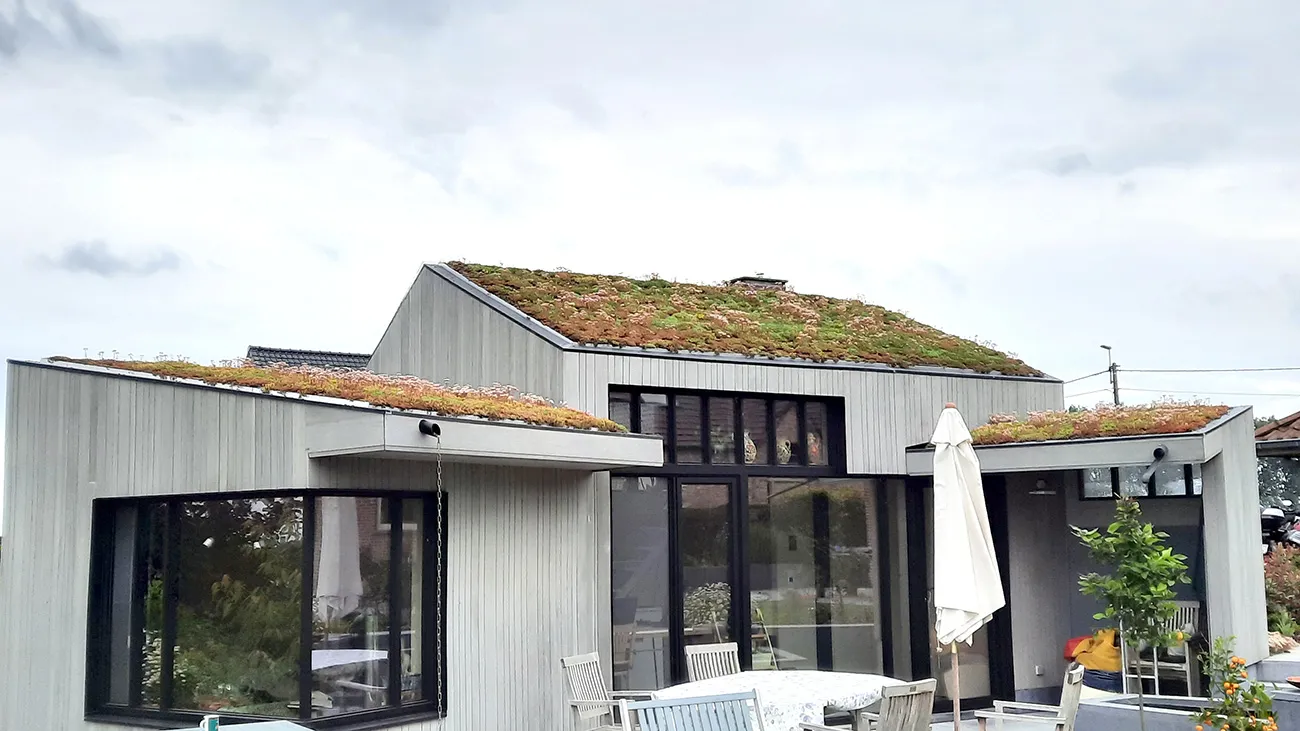
Given the wide range of options, installing a green roof or roof garden might seem to involve nothing more than creating a garden at a higher level. However, this extra height has practical implications that are far from obvious.
First, arrangements must be made to lift all the materials onto the roof, and work planning is often less flexible than on a conventional garden project.
Secondly, working at height requires additional safety measures, such as fall-protection systems and appropriate PPE. Large construction sites are also required to keep a register of everyone on site.
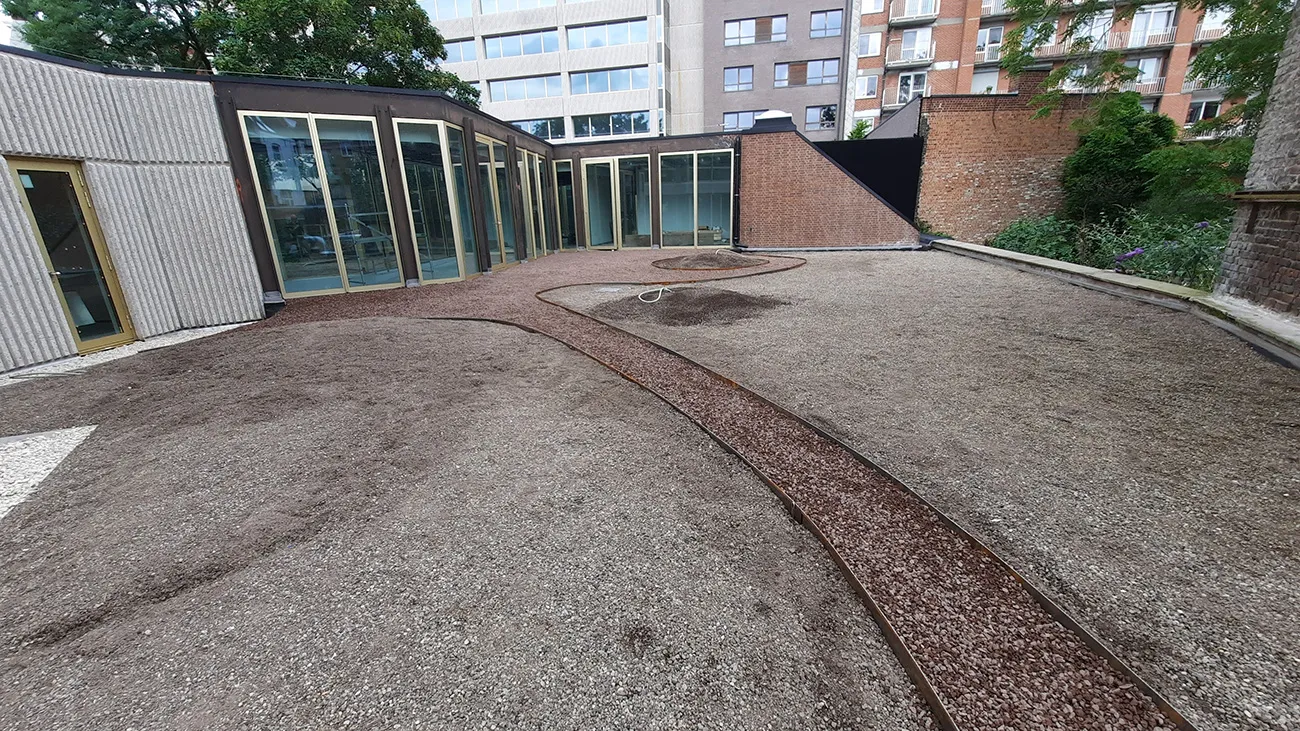
Large-scale projects must also take additional fire safety standards into account, including the requirement to provide sterile zones. These are generally filled with gravel, but CSTC and the Fédération belge pour la végétalisation des façades et toitures are currently assessing alternatives.
The natural conditions on the roof must be assessed at the design stage. Specifically, this means considering the depth and composition of the substrate, on the one hand, and the generally more extreme climatic conditions, on the other. The type of vegetation that will grow on the roof depends on this assessment. A difference in height of eight metres, for example, makes a huge difference to the choice of planting. For intensive green roofs and roof gardens in particular, it is advisable to seek advice from experienced professionals or a green roof system manufacturer.
Choose a durable build-up
The vegetation is only the top layer of a green roof. Beneath it is a complete system that includes, among other things, the substrate and a drainage layer. If you want to create a high-quality, durable green roof, its build-up must meet a number of minimum requirements.
The composition of the substrate is the first point to consider. Naturally, the organic matter in the substrate must be suitable for the planting, and care must also be taken not to use contaminated substrates or additives. The composition of substrates supplied by German manufacturers is certified in accordance with FLL (the Research Society for Landscape Development and Landscape Construction) guidelines.
In Belgium, the Fédération belge pour la végétalisation des façades et toitures is working on a similar quality label. It also specifies a substrate depth of at least 6 centimetres, preferably 8 centimetres, combined with a water retention capacity of 35 litres of water/m². This should prevent green roofs from dying off during prolonged dry spells.
To prevent the green roof build-up from becoming acidic over time, air must also be able to circulate. Several systems on the market combine drainage, water retention and air circulation.
Stick to maintenance intervals
Every natural system needs feeding. Maintenance for an extensive green roof is minimal, but it still needs fertilising once a year.
For intensive green roofs, the first two years are crucial. After this growth period, maintenance every two or three years will be sufficient, depending, of course, on the specific nature and composition of the green roof. If it includes lawns, for example, your intensive roof will need regular mowing in summer.
In all cases, it is very important to retain the right plants and grasses and remove problematic species. Acacia roots, for example, are so aggressive that they could penetrate waterproofing membranes. They should therefore be removed in good time. In short, maintenance requires a good understanding of the ecosystem developing on the roof.
Question about this story? Ask your question
Keep following this
Get an email when a new story is published. No account needed.
- ThemeDesigning outdoor spaces
- SubjectExterior