Ceramic House: a unique façade made from 3D-printed bricks
Texte : Eva Goossens | Photos : Riccardo De Vecchi / Studio RAP
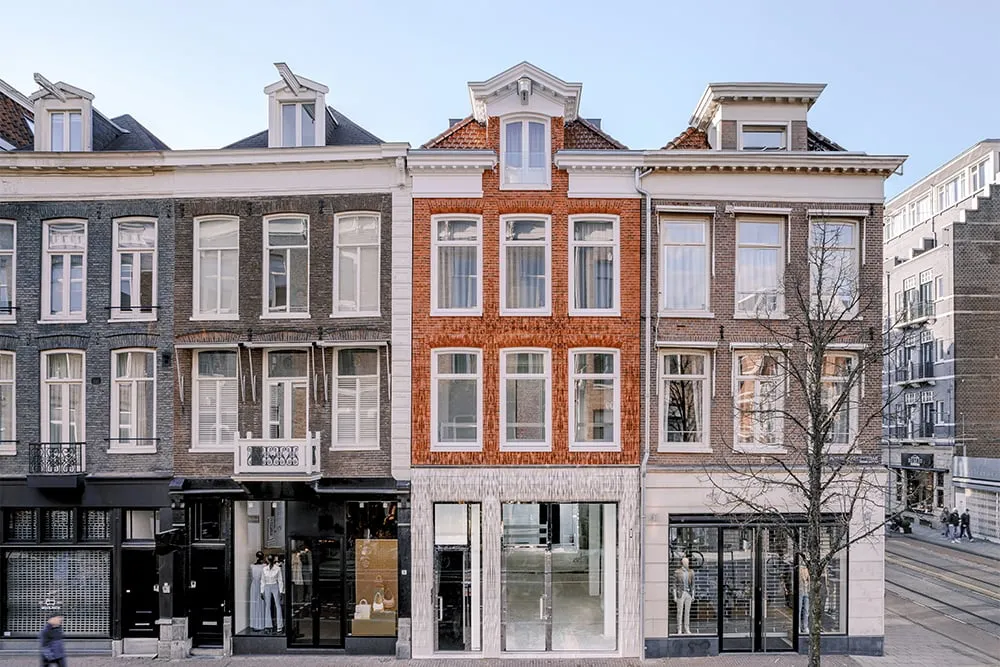
With innovative façade applications one of the central themes of this edition, we had to cover this very special project: Ceramic House in Amsterdam, a project by architecture practice Studio RAP. The façade is made up of around 3,000 3D-printed ceramic bricks, each unique and finished using traditional craft methods. The visual result is astonishing. We were keen to take a closer look at the technical aspects.
Rotterdam-based Studio RAP is not an architecture practice in the conventional sense. Alongside its offices, it has a robotics laboratory dedicated to R&D, as well as production facilities equipped with high-tech robotic arms used to develop new manufacturing techniques. The idea is to apply these techniques directly in the practice’s projects. Projects that are, to say the least, unusual. As well as Ceramic House, another project that stands out is Theater Zuidplein in Rotterdam. The interior walls of this major cultural venue are clad with no fewer than 6,000 different aluminium triangles, which highlight the building’s distinctive aesthetic while also optimising its acoustic performance. In a similar vein to Ceramic House, New Delft Blue features 3D-printed ceramic tiles that nod to Delft Blue, the world-famous earthenware. It is another example of how computational algorithms, 3D-printed ceramic elements and traditional glazing techniques can reveal the new architectural potential of ceramics.
A project inspired by knitwear
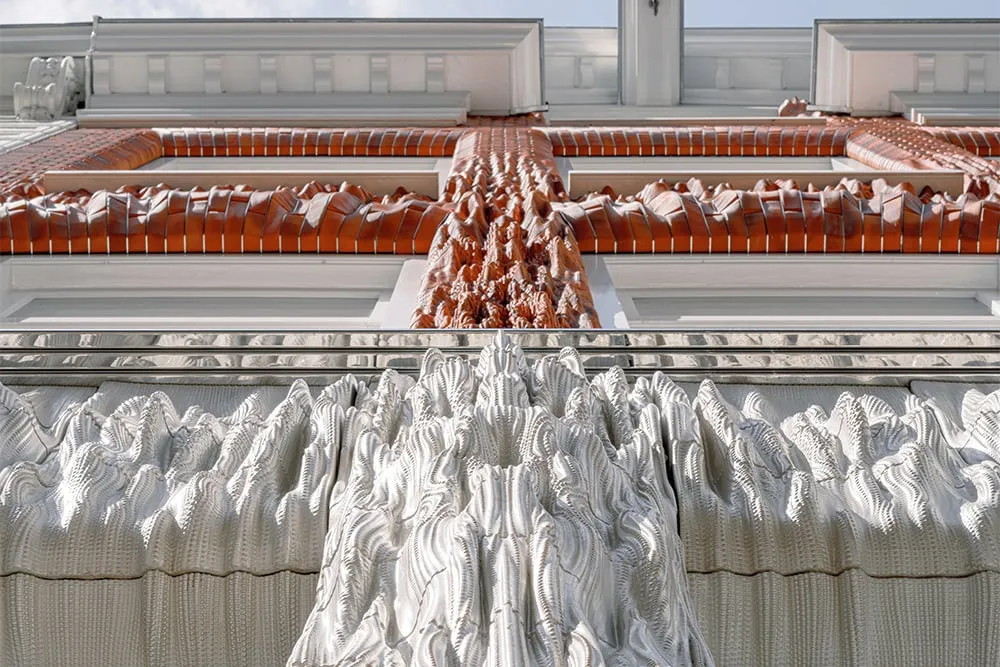
A high-end fashion boutique on P.C. Hooftstraat in Amsterdam, one of the Netherlands’ most exclusive shopping streets, was looking for a way to stand out. The answer was a façade like no other. Studio RAP was more than happy to take on the challenge. Naturally, the team had to consider the aesthetic requirements associated with the building’s location in the heart of a historic city. But that did not stop the architects from proposing an innovative concept. They drew inspiration from fashion, and knitwear in particular. Wessel van Beerendonk, architect and co-founder of Studio RAP: “When you look at a knitted garment, you see several interesting features that we translated into an architectural project. First, there are the elegant folds in the fabric. Then, the interlaced threads. And finally, when you look even more closely, the pattern of the stitches. We transferred these features into the digital world in the form of computer-generated models.” This marks the beginning of a new era in digital design, with an unprecedented architectural application.
Bringing digital and craft together
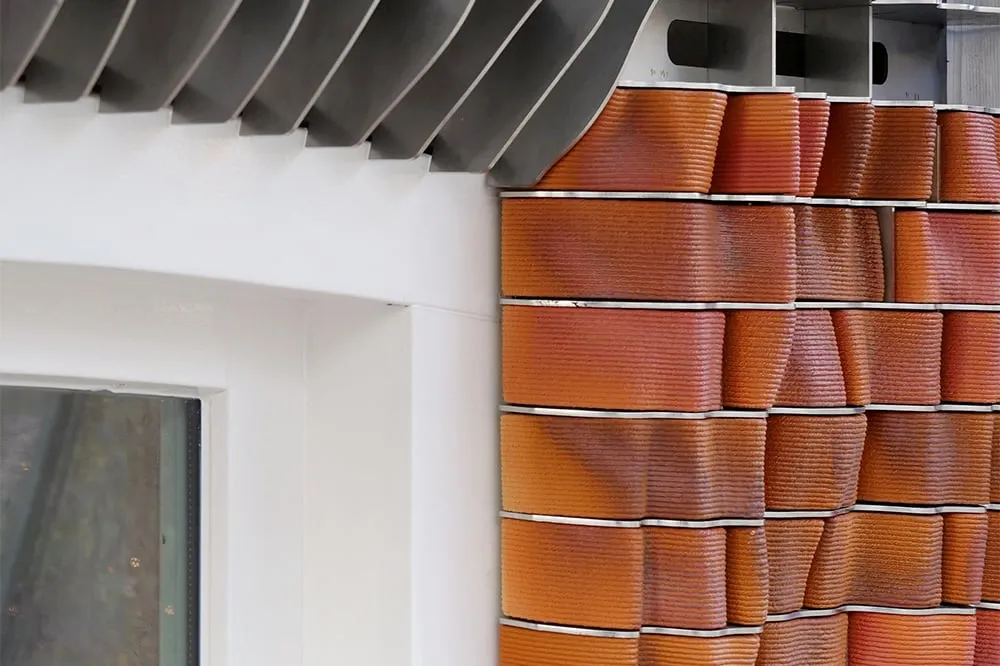
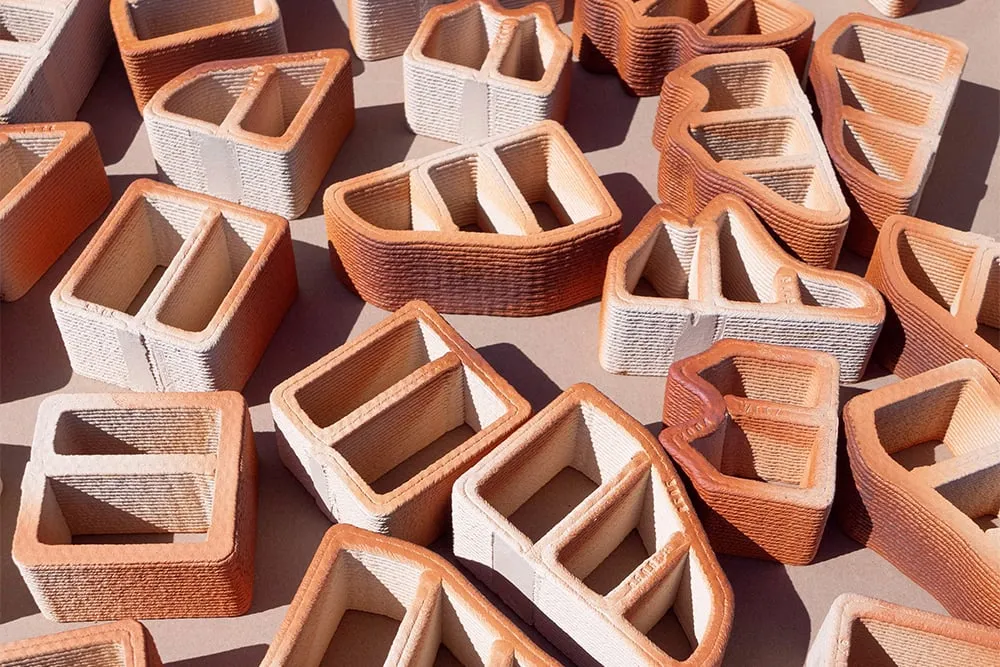
The entire façade is clad in 3D-printed bricks, manufactured layer by layer, then fired and glazed using traditional craft methods. The project had to take account of the original façade’s silhouette, with its distinctive three-part composition, as well as the aesthetic requirements. The scale, size, type and colour of the ornaments and materials were carefully selected to harmonise with the adjacent buildings. The aim was to integrate the innovative architecture seamlessly into the street’s traditional fabric. The organic, undulating structure of the ceramic façade changes as you approach the building from different angles. The light-coloured bricks at the bottom, pearl white with a touch of yellow, were designed to be particularly expressive at eye level, with the concept gradually softening until it becomes a flat alignment at ground level. On the upper floors, the façade features 3D-printed bricks glazed in three shades of red. The details of the knit-inspired pattern fade as the façade rises. The bricks were laid in Dutch bond, carefully aligned with the masonry of the adjacent façade. Set in laser-cut stainless steel cassettes, the bricks were bonded in place in a very specific order, needless to say. It was no easy task, but the result is worth the effort. A story in which digital technologies and “computational design” serve a distinctive architectural language that enriches the world, making it more diverse and more captivating.
PROJECT DETAILS
Project: Ceramic House
Location: Amsterdam
Architect: Studio RAP
Question about this story? Ask your question
Keep following this
Get an email when a new story is published. No account needed.
- ThemeHigh-performance façades and roofs
- SubjectExterior