Api-toit® biodiversity roof, the new green roof
Texte : Eva Goossens | Photos : IBIC
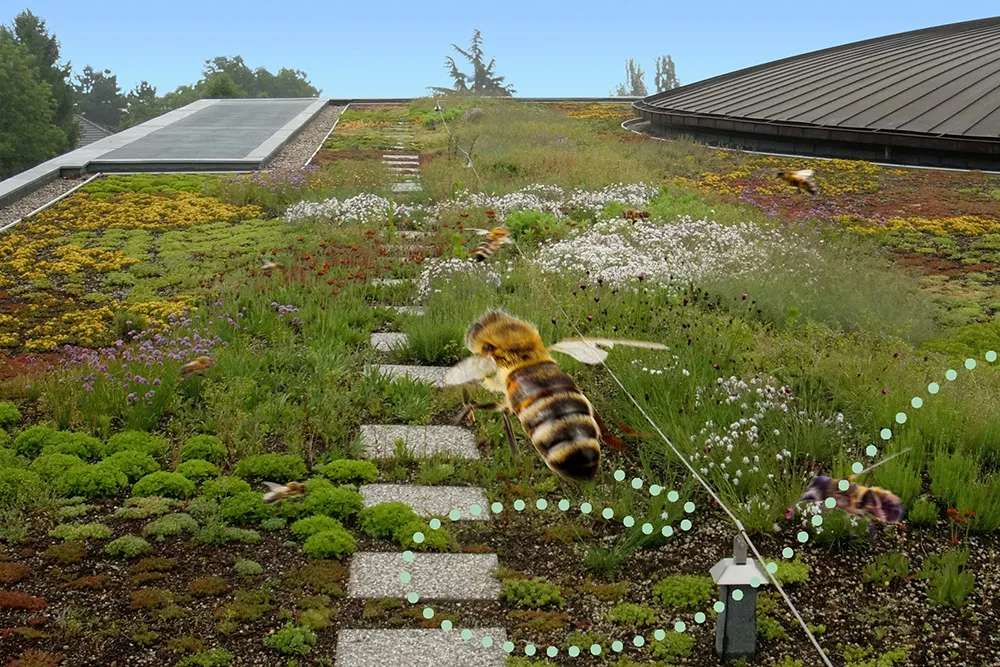
“Our aim? To attract as many pollinators as possible.”
Bee numbers are declining in Belgium. The Api-toit® project was launched around 40 years ago. Its motto? Every little action counts for bees. The aim is to make green roofs more attractive to bees and insect populations looking for flowers. And although the project has officially come to an end, field research to identify more biodiversity-rich green roofs is continuing.
How did Api-toit® develop? We put the question to its originator and green-roof specialist IBIC, which looked into the subject in 2020 in collaboration with Natuurpunt, Hogeschool PXL and KU Leuven. Fourteen pilot roofs built to a similar design were installed and studied. Bees and other insects were counted, with growing enthusiasm. Since then, the seed mix for Api-toit®, consisting of around 30 native varieties, has become a reality. It is now being used and offered for sale. Rob Christensen, Head of IBIC Realize: “The ideal mix can always evolve and vary depending on the situation. After all, every green roof is unique in terms of its location and the possibility of incorporating slopes with a thicker layer of substrate.” Alongside the right seed mix, the varied terrain itself is already a boon to biodiversity and the success of Api-toit®, as is the presence of water and sufficient shelter to encourage bees to stay nearby.
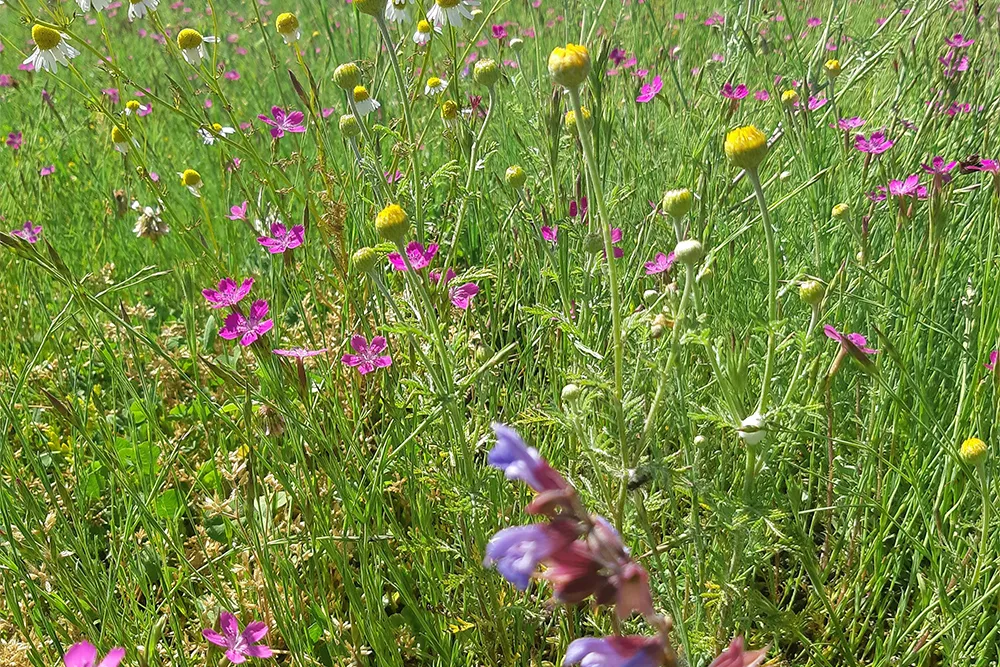
Hardy, native and local plants
A garden that attracts bees cannot be compared with a green roof. On a green roof, plants have to grow in extreme conditions and withstand long periods of drought. Brecht Lammens, Commercial Project Manager at IBIC: “We looked for what are known as ‘host plants’, meaning plants that certain insects depend on. An initial list was drawn up based on theoretical knowledge. Varieties that failed to germinate or did not last long were removed from the list. We continued with the others. We are still monitoring these projects to refine the Api-toits®.” Rob Christensen adds: “On several green roofs, plants that were not originally part of the mix have grown naturally. If these plants add value in terms of biodiversity and do not hinder proliferation, we leave them in place. What is more, we observe their usefulness to decide whether or not to add them to the seed mix.” Nature is the best teacher.
Substrate and shelter
Shelters and different types of substrate were then studied. Although the results showed less marked effects, IBIC remains convinced of their importance. “We try to keep bees in the garden, including by providing dead wood in which they can make an ideal nest. As for the substrate, we use granules of different sizes and thicknesses,” says Louis Fierens, also a Project Manager at IBIC. In this respect, IBIC is looking forward to further development of the circular substrate made from processed wood granules. Louis Fierens: “An Api-toit® needs to be installed on a smooth, dry surface. A substrate made from recycled wood granules would therefore be ideal. It completes the sustainable picture.”
Easy to maintain
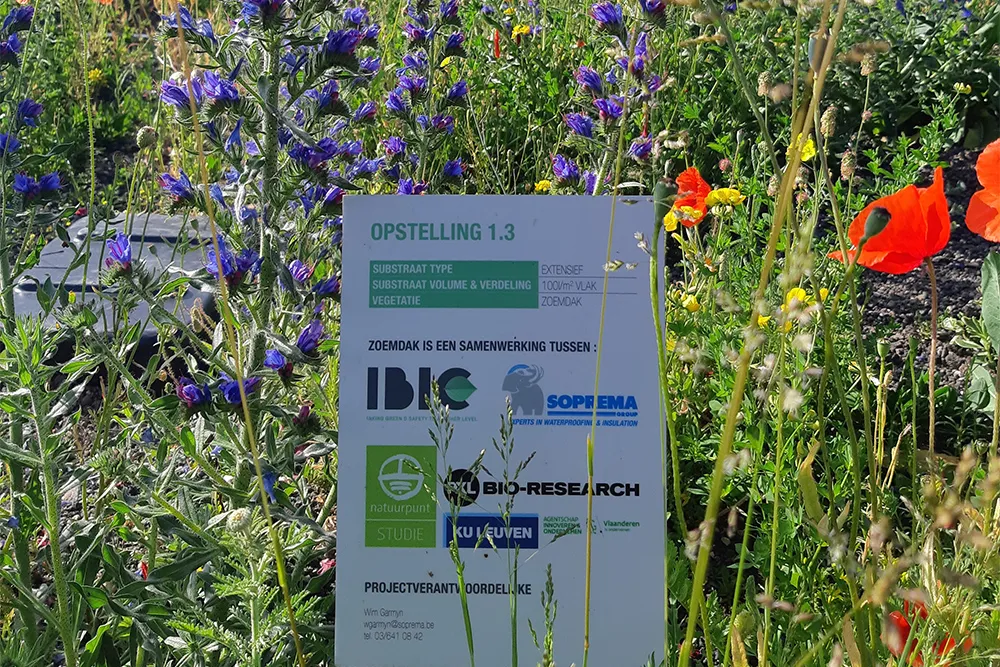
What about appearance and maintenance? A natural Api-toit® flowers from spring to autumn. Louis Fierens: “By adding a selection of winter-flowering bulbs, we can also bring colour and variety to the roof in winter.” When it comes to maintenance, the first step is to monitor the roof. “Once the Api-toit® is well established, it does require very little maintenance. Invasive species, which of course need to be identified among the native flora, are removed. In addition, one annual cut is enough, as with a meadow in a nature reserve. After that, there is no need to mow, allowing the seeds to take root on the roof. The roof is then cleared so that the substrate is as sparse as possible. Unlike an intensive green roof, an Api-toit® should not be watered.” An intensive green roof, an extensive one or a biodiversity-rich Api-toit®? “The different types of green roof do not necessarily have to be mutually exclusive and can be combined,” concludes Brecht Lammens. In any case, adding more biodiversity is always a good idea.
Question about this story? Ask your question
Keep following this
Get an email when a new story is published. No account needed.
- ThemeHigh-performance façades and roofs
- SubjectExterior